Kindergarten
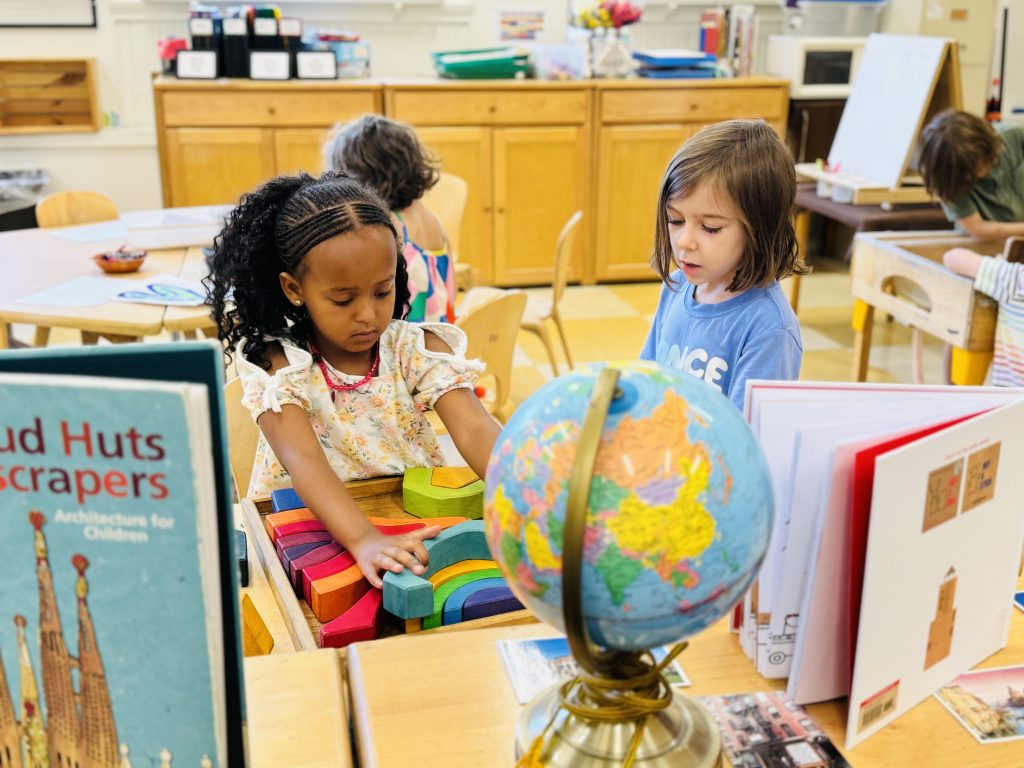
Kindergarten at Lesley Ellis is a joyful, hands-on, and a deeply personal introduction to school life. Students learn through exploration, collaboration, and creative expression. Teachers nurture each child’s natural curiosity and sense of wonder while guiding them toward independence, confidence, and community awareness.
Across subjects, students learn to think critically, solve problems, and express ideas in multiple ways, through words, numbers, movement, music, Spanish, and art. Our goal is for children to see themselves as capable, curious learners who are valued members of their classroom and the wider world.
This is What Learning Looks Like
Language Arts

Mathematics
Science
Social Studies
Antibias Education
Spanish
Music
Visual Arts
Physical Education
Library and Information Literacy
Health and Wellness
Social and Emotional Learning
Learning Looks Like This
During the kindergarten social studies unit on Strong People, students learned about various people, many of whom are not famous but all of whom have exhibited qualities that make them “strong” in some sense. One day, during the morning meeting, the teacher asks the students to think about what they have learned about the people they have studied so far—about what makes them strong. He shows the children the large piece of chart paper where he will record all of their ideas, saying, “Let’s see if we can fill this up with all of the things that might make someone “strong.”
Children begin to raise their hands to share ideas.
“You are strong if you do something hard, like read a long book all by yourself.”
“Somebody who does a big job.”
“Can you tell me more about that?” the teacher asks.
“Hmmm…like if you are in charge of the whole world, like the president.”
The ideas are written on the chart paper and start to add up.
“Strong means you did something that other people didn’t like.”
“Do you mean like if you grabbed a toy from someone who was playing with it, then you are strong?” asks the teacher.
“No! I mean like if you wanted to sit on the bus and they said you couldn’t.”
“You are talking about Rosa Parks!” calls out a girl on the other side of the circle.
The conversation builds as the teacher helps the students tease out why Rosa Parks was strong. The chart paper fills up with words, including “brave,” “muscly,” “smart,” and “alone.”
The discussion wraps up and the teacher asks students to draw a picture of someone they know who is strong. Later, when the students share their drawings, they discuss the strengths of each individual and connect the lessons to their own lives.